The Earth as a Cybernetic System
Carbon Cycles, Climate Feedbacks and the Limits of Planetary Regulation
Season 2 · Episode 10
The Earth as a Cybernetic System
How does the Earth regulate its carbon cycle, and what happens when climate feedbacks begin to amplify warming? Climate scientist Pep Canadell explores the intricate relationships between carbon emissions, natural sinks and planetary stability, revealing how understanding these interconnected processes can inform our collective response to climate change and net zero.
Listen
Guest speaker
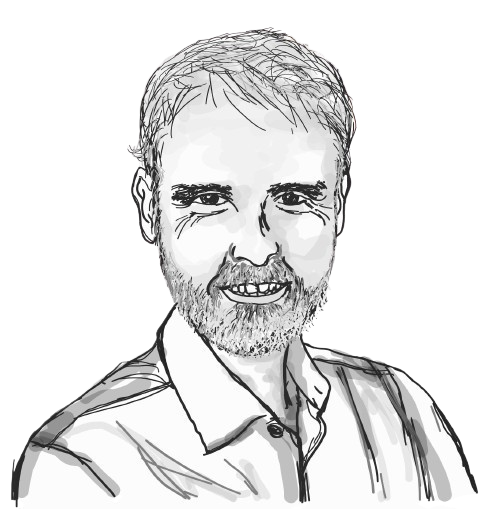
Pep Canadell
Dr Pep Canadell is a Chief Research Scientist at CSIRO Environment, Executive Director of the Global Carbon Project, and Honorary Professor at the Australian National University’s Fenner School of Environment and Society. Originally trained in biology and terrestrial ecology at the University Autonomous of Barcelona, Catalonia in Spain, Pep has built an international research career spanning the United States and Australia. His research focuses on global greenhouse gas budgets, the vulnerability of Earth’s carbon sinks, carbon–climate feedbacks, and pathways to net-zero emissions. He has contributed to the Intergovernmental Panel on Climate Change (IPCC) for over two decades, authored more than 300 peer-reviewed papers, and is a Fellow of the Australian Academy of Science and other leading scientific academies. Recognised among the world’s most influential climate scientists, Pep actively connects scientific research with climate policy, decarbonisation strategies, and public understanding of climate change.
Quick quiz
Transcript
Open transcript
Sungyeon:
Today, I’m very much delighted to have Dr. Pep Canadell, Chief Research Scientist at CSIRO, Australia’s National Science Agency, and an Honorary Professor at the Australian National University’s Fenner School of Environment and Society.
Welcome, Pep!
Pep:
Great pleasure to be here.
Sungyeon:
Thanks for coming. Let’s talk a little bit about your research journey first. You got your degrees in biology and terrestrial ecology in Barcelona in Spain. And you’ve worked extensively across disciplines including ecology, climate science, and the global carbon cycle. So I’m curious how you came to study the Earth as such an interconnected system. Has there been any special moment for you to pursue this field?
Pep:
So, as a kid, I was really interested in the environment, and I knew that I was going to become something of an environmental scientist. I didn’t know I was going to go to Africa to study animals or study fisheries or become a marine biologist. But it is true that I spent a lot of years in my long summers in the Mediterranean where I became really interested about the ocean and the ocean health. So, at some point I did think that I was going to become a marine biologist, but look at the opportunity came to go to university, move into ecology. The university was very strong on terrestrial ecology, and it took me nothing to really switch my chip and say, that’s what I want to study. I focus a lot on ecology, which is the science of interconnectivity and interactions and scales.
It really was I mean, I did a master on tree roots, which you would say that’s kind of counteractive for somebody who ended up studying the planet. But it was that fundamental ecology that it really kind of made you go through scales with no problem. I was interested on carbon, on nutrients, on water. And you kind of study the same fluxes at the plot level, at the landscape level, or at the planetary level. They’re exactly the same fluxes, it’s just that the planetary ones are humongous, and we talk about gigatons and teratons as opposed to kilos and tons. But it was fundamentally the same. And to this moment, that background on ecology really has helped me very much in navigating this very complex science of climate sciences, carbon cycle and planetary or system science.
Sungyeon:
Right. Yeah, awesome. And currently you’re the Executive Director of the Global Carbon Project, which brings together researchers from around the world to track carbon emissions and their movement through the Earth system. So, for those listeners unfamiliar with the concept, could you first explain what exactly the global carbon budget refers to and what does it tell us about the state of our planet?
Pep:
The carbon budget is actually not different from the concept of what you would think about a project financial budget or a household budget where you basically count all the income and all the expenditures and then you do the balance. And for us, the incomes are all the emissions from human activities and natural processes that send carbon emissions, greenhouse emissions into the atmosphere, and then what we call the removals. That is, trees are sucking up CO2 to grow, store carbon. And the balance, of course, is how much carbon stays in the atmosphere and therefore leads to climate change.
So, it’s incredibly complex because there’s so many sources, both human sources and natural sources and the same for sinks. Like if you go and we plant trees, then it’s a new sink of CO2 that needs to be counted. Not if you plant a tree, but if you plant huge amounts of trees, then these things need to be counted somehow. So that’s why the importance of the budget is that it tells you the details of that imbalance, whether you’re saving or going to credit. In our case, whether we’re accumulating CO2 in the atmosphere, which we do, or we remove CO2, which we do but not enough to keep up with the total amount of emissions we put into the atmosphere.
So, once we have this carbon and we understand why of that imbalance, who is doing what, then we can calculate what we call the remaining carbon budget. And that is, if the Paris Agreement says we want to stabilise the climate at 1.5 degrees, we can tell you exactly how much more emission you can emit before you need to completely stop emissions if you want to stay at that temperature for a long time. So, if you ask me, Pep, what’s the remaining carbon budget to 1.5? I’ll say, well, at the pace of emissions we’re doing now, you have about four or five years the most. After that, the whole planet should shut down all emissions, which of course, it’s an impossibility. Therefore, I’m telling you that stopping at 1.5 degrees as the Paris Agreement would love to, it’s not possible anymore.
So that’s why the carbon budget and global carbon budget, and of course we can do these budgets at the national level, and Russia we do it for Australia as well. So we do the carbon budget, the methane budget, the nitrous oxide budget, all the greenhouse gas budgets, so we understand the imbalances, the causes, and what else we can do or not, if we want to stabilise the climate at certain levels.
Sungyeon:
Right, yeah. So, you just talked about those sinks and sources of greenhouse gas emissions. And I understand that forests and oceans can absorb a substantial amount of carbon dioxide we emit. So, from a cybernetic perspective, we might think of these natural carbon sinks as part of the Earth’s regulatory processes. But then I got to wonder, how reliable are they? Are there any signs that their capacity to absorb carbon is changing as the planet warms up?
Pep:
Yeah, so this is a really fundamental question in climate and carbon sciences. And also one of the most amazing facts in the global carbon cycle, and that is for every ton of carbon dioxide emissions we put into the atmosphere from our activities, the combustion of fossil fuels and land clearing, deforestation, about half gets removed by the forest and the oceans. All vegetation, but forests are a very important carbon sink, and the oceans.
Now, the second most remarkable thing is that this fraction of about 50% has remained very variable one year to another, but long-term remarkably robust. So, in the 1960s, we’re emitting about 6 billion tons of CO2 into the atmosphere, which is a humongous amount. So, about half of it, 3 billion tons, were removed by oceans and land sinks. Now last year, we emitted 42 billion tons of carbon into the atmosphere, carbon dioxide, which is many times more than 1960s. But the land sinks and the ocean sinks have still removed about 50% of it, more than 20 billion tons. Remarkable property of homeostasis, of regulatory process, as you are referring to.
But here’s what we’re learning too. Is that every time one single year is warmer than the average? And let’s say like this year is going to be a much warmer year because of El Niño, this major climate phenomenon that affects the entire planet, the sinks, particularly the land sinks, become much less efficient. So much less efficient that we see how CO2 in the atmosphere accumulates that particular year much faster than the average.
Now, if I’m telling you this behaviour clearly – that’s just one way into the future, which is a warmer future, we know. And that warmer future will make those things less efficient, which basically means that 50% removal of carbon dioxide, which you could consider like a 50% discount on climate change thanks to our natural CO2 sinks. It will start diminishing and become 40% and 30% – we don’t know how far it’s going to go, depending on how hot we get the whole planet in the next century. So incredibly important and incredibly sensitive to climate variability, and in this case, climate trends and warming trends, as I mentioned. So, the future, it’s less rosy as it has been so far, in so far that I said we have this 50% discount on climate change, we’ll have less going into the future. And that’s also one reason why we’re studying it so well and how we can make sure that whatever thing we can preserve, both lands and oceans, and whatever things we can increase, like doing reforestation, revegetation, supporting regrowth, how important this thing is for this overall 50% cleaning of our atmosphere.
Sungyeon:
I see, I see. Apart from deforestation, or maybe related to deforestation, I think the growing degree of urbanisation of the planet is also kind of accelerating that kind of. breakage of balance, I suppose.
Pep:
Yeah, so I mean, urbanisation and infrastructure, deployment of infrastructure everywhere, of course, it’s taking natural land at some point. Whether you had forest or any kind of other vegetation means that you’re removing what before was a carbon sink. Anywhere there’s vegetation, there’s a carbon sink, whether it be smaller or bigger, but your plants are growing and taking up CO2 and storing it in their trunks and leaves and branches, then into the soils. As soon as you remove it, means that sink that you had there, it’s no longer there. And that’s not just that you lost some carbon. You lost carbon removal capacity every single year into infinity, because that carbon sink was there, that carbon sink is no longer there.
Sungyeon:
True, yeah. That actually reminded me of your recent Distinguished Lecture at ANU, where you emphasised the importance of carbon-climate feedback in shaping the changes we are observing and experiencing. So, I guess there’s probably a great deal to unpack here, but could you walk us through one or two examples of how these feedback loops work and why they matter?
Pep:
Yeah, so a feedback loop can be something that reinforces a trend or diminishes that trend; it can be positive or negative. And of course, we’re concerned on what we call positive carbon climate feedbacks, the ones that will push more carbon into the atmosphere and will further push the climate. And as the climate gets warmer, will further push even more carbon emissions.
And the classic example is what we call the permafrost. So there’s huge demands of carbon stored in the tundra and boreal regions, which are very cold. Plants have been taking up carbon dioxide for a long time, and there’s relatively lower decomposition than the rest of the world. Basically, it means that it accumulates and it’s so cold, it’s been pushed into the soil and eventually becomes completely frozen, and some of the carbon has been frozen for thousands of years. Now we’re warming the high latitudes very rapidly, more than the global average, which basically means that some of these carbon stores might thaw, frozen carbon stores might thaw, and more emissions will come out from there.
Now that’s a long-term concern, which is very real, but what we observed so far is that at the same time there is warming and more emissions, and we do see already some more emissions some places, at the same time the growing season is also longer. So, plants can take CO2 for longer, can remove CO2 for longer. And so here all of a sudden a very concerning positive carbon-climate feedback so far had not been kind of as bad as we thought. But then we began to see fire coming in very strong seasons from 2021 in Siberia, 2022 in Canada, 2024 again, 2025, and since then has been nonstop, the biggest fire seasons we’ve seen in the boreal region, in the place where there’s permafrost.
Two things have happened. First is that huge amount of emissions have come very quickly, very straightforward from purely burning the forest. Things that we’re not really paying enough attention because we’re too busy and concerned with the permafrost thawing. And second, as you blacken the surfaces, because the fire burning, the surface, black surface warms up quicker than any other surface in the world; even further increases faster that decomposition because of higher temperatures. All these things happen very quickly, almost to some extent a little unexpected, and through a route it’s almost like taking the back door because we were concerned with the thawing of the permafrost, not with the fire and losing the carbon on the trunks, which if anything, we thought that we were gaining a lot of carbon because of the longer growing season. Just to show that these feedbacks are complex, they can come from different ways that you don’t fully expect it, and that the ultimate balance is not always very trivial to measure, to estimate. But that’s a really important one.
And the other one that I did refer a little by saying when we have these warmer years than normal, and the land sink becomes less efficient. So, what we find is that the Amazon, the tropics, and particularly the Amazon, it’s perhaps the most sensitive carbon sink on land and it’s the one that reduces the most its capacity to remove CO2 when it’s very hot. And of course, the concern is the same as before as we warm the planet into the future. these very large sinks of carbon in the tropics, the biggest sinks in the world, no doubt about, are the most sensitive and the ones that are probably going to be suffering the most and declining the most in the future. Because they’re already working at kind of optimal temperatures which are very close to the maximum and putting in even excess temperature doesn’t help at all.
Sungyeon:
Yeah. It sounds like there’s a whole lot of chain effects taking place, which are really alarming. And in complex systems, gradual changes in external conditions can sometimes lead to sudden and potentially irreversible transitions. So, I guess there might be some similar behaviour in the climate system, particularly in ecosystems and carbon storage, to go through such transitions, right? And do you think that we will soon come to the point where we can’t really avoid such a transition?
Pep:
So, I think that, I mean, one thing is a planetary transition, which is harder to actually say. The other is regionally, there’s going to be a lot of transitions and a lot of changes. And in some instances, very fast changes, as just the example of the boreal region and the fires. Fire is a really important driver of fast change. And I think that we see everywhere in the world where you build slowly, almost linearly, kind of stress into a system and then there’s a fire regime change because whatever, multiple year drought, or in some instances can be lots of rain, a lot of accumulation of biomass and fuel, and then really strong, very intense fires, which really kills vegetation to a point that it’s hard to actually see that vegetation coming back afterwards. And we see this thing in some parts of, actually again, boreal regions, what we call the taiga. The taiga is the forest in the southern end, the warmer end of. We see that some of the fires already so intense And it’s hot enough throughout the year that those forests have difficulties in regenerating after fire, which they did a long time ago. But the temperature and drought in some instances is preventing that taiga to come back. So, we already see what we call full ecosystem collapse at the regional level in some parts of the world.
Sungyeon:
And as you’ve described so far, the climate system involves such a lot of interacting processes operating across different spatial and temporal scales. Then how do you and your collaborators deal with such complexity when estimating carbon budgets and projecting future changes? And what are the most important uncertainties we still face?
Pep:
So there’s uncertainties everywhere, but one thing that we actually deal with these high-level uncertainties is that science has moved a lot into building robustness through multiple and as independent as possible lines of evidence. So, we no longer work with one model. We no longer work with one satellite. We no longer work with one data set. We work with very large ensembles of models, large data sets, multiple satellites, they see different things, multiple sensors, observations. And we do, what we call, try to reconcile of all this information. And reconcile this information doesn’t mean trying to make it be all the same. It’s just to say to what extent all these data is pointing towards a specific conclusion or supports a specific estimate, you know, value for a particular flux. And how confident, you know, that multiple lines of evidence, you know, gives for us to make a statement about that.
So if we can make sense, we feel high confidence, we may still have uncertainty, but we have a high confidence that it’s within that range, within that value. Or for trends, sometimes a value, that particular value, it’s not clear or has high uncertainty, but a trend over multiple years, multiple decades, we know it very well. And a key example is degradation and deforestation, particularly degradation, it’s very difficult to actually see what’s going on in this degradation, particularly in the forest. Satellites not always see everything, particularly inside of the canopies, under the canopies. So we have very large uncertainties for these numbers, but the trends are very robust because we have now multiple lines of evidence that are independent and they all show that emissions are declining. And the absolute value is still large uncertainties up to 50%, which is a lot, but it tell us that something very important, which is some policies in some parts of the world are actually working; different matters whether this policy should work even better and should work even faster. But we can say a lot of things even in these very complex and large uncertainties. When we talk about at the planetary level, of course, if you move down to a region, down to a country with a lot of observations, you can, of course, reduce dramatically those uncertainties.
Sungyeon:
Wow, yeah, that’s the power of science, right? Super fascinating. And another point that I wanted to bring up was that cybernetics is concerned not only with understanding how systems themselves behave, but also with how we observe and influence them. So I understand that the Global Carbon Project produces scientific knowledge, they can inform decisions around the world, but how does that information actually make its way into climate policy? And are there any kind of gaps between them, or between what we know and what we do?
Pep:
Yeah so, well, there’s a huge gap between what we know and what we do, because I think that climate science has established very well that we’re in trouble, we’re causing that trouble, and that the future is not always going to be pretty. And I think that the level at which we’re implementing climate policies to reduce emissions, it’s way, way, way too slow. So there’s a huge gap there.
Now how science tries to be more useful and more policy-relevant in taking an action. So Global Common Project actually started 25 years ago, and we started as a group of mostly biochemists, you know, people who are interested in the carbon cycle, you know, how the flows of carbon in and out. And over the years, and in this case, 2.5 decades, we work a lot with governments and policy, international policy processes like the UN, the sub-step process, which is the technical process supporting the UN Climate Convention from a Convention on Climate Change, to learn about what’s most useful to them. And equally important, how we need to pack that information to communicate it to them and where. So, we made huge efforts, both in communication and being part of this, kind of more technical sessions of negotiations, not political discussions, to really bring what’s one voice of the global community on carbon trends, greenhouse trends, carbon budgets, remaining carbon budgets, all the things that I’m saying that they’re so useful for setting targets. For instance, setting the targets of the Paris Agreement, setting targets about when we would need to be at Net Zero emissions. All these things, they need to rely on the fundamental information, which is not just the fossil fuels emissions from the human activities, but it’s how the whole system is reacting and how that net balance that I was talking about, carbon balance in the atmosphere, is changing and why it’s changing and how it’s likely to change in the future, of course, because this is a long-term issue that we’re going to be dealing for a lot of years to come.
Sungyeon:
Absolutely. I think you briefly mentioned this point, which is the challenge that I could also notice. The climate system responds over decades or centuries, unlike political and economic decisions, which often operate on much shorter time scales. So, I suppose one of the crucial questions to ask here is, how significant is this mismatch, and what would help us make better decisions when the consequences of our actions may not become fully apparent for generations?
Pep:
Yeah, so the mismatch has been hugely important. I think that probably up to now. And the reason is that when I started in the 90s and I gave talks and interviews about climate change, it was incredibly challenging to actually try to convey what a change of two or three degrees in the global temperature means for you or means for a government who needs to make decisions about their budget, the annual budget, how they’re going to spend it and whether they need to spend any money on this stuff. It was really difficult.
It was seen as an issue that will impact less developing countries, not the rich world. And I recall very distinctively comms people communication people were telling me, Pep, you need to talk about the things that people care. It’s like, telling about the wine varieties that we grow in here in Australia, we won’t be able to grow, and we’ll need to change, and we’ll lose, those very distinctive varieties of that makes Australian wine so famous.
So things that, if you kind of fast forward 25 years, 30 years to now, I mean, look at this last summer in the northern hemisphere. I mean, people had literally have to run for their own life because either multiple in sequence heat waves, floods, or fires. And we can also see ourselves in 2019-20 where we had extreme heat and extreme fires, which it was a very distinctive kind of fingerprint of many things, including at the centre of climate change.
So, we have now a world population that about two-thirds of them have lived and they had lived-experiences of climate extremes that they had never suffered before or lived, experienced before. Now we still need to make sure that these two-thirds of the global population makes the link between that very unique thing that they had never experienced on an extreme event to a link to climate change to really make sure that we can switch the sheep and say, all right, clearly we need to do something. This is not normal. And we know that this thing is just going to get worse.
So, I think that this gap has been very important, but it’s closing rapidly as people are living more what’s real, the expression of climate change and not just seeing how you’re going to tell people what 2 degrees means for them, but what that sequence of extreme days of heat and super hot nights and fire, associated fire, and then a month later, these big floods on these very fast, short-lived storms that the cities and towns have no capacity to drain so quickly, the water had huge impacts. Even this in a framework where, in the case of Australia, we always had floods, we have always had droughts, we have always had fires, but this is changing too. And the numbers and the statistics are actually clearly showing that that’s the case as well.
Sungyeon:
That’s right. So, I think this is something also you mentioned briefly, which is about net zero or net balance. It is certain that we are trying to achieve net zero, but achieving it involves changes across a lot of domains, including energy systems, economies, land use, and also human behaviour. So, from your perspective, what does reaching net zero really require? And how much can we reasonably rely on natural or engineered carbon removal? Is there anything that you would like to suggest us to maybe practice on a daily basis or keep in mind at least?
Pep:
Yeah, and I look at, I mean, you said it very well. It’s a humongous challenge. Actually, I would say that. People don’t realise how big of a challenge it is, and certainly governments are signing what they’ve signed and make legislated processes where we need, in this case in Australia, reach net zero emissions by 2050 will entail. So I’ll say a few things. I mean, first of all, there’s no silver bullet. Let me just start here. There’s no silver bullet to solve the problem exactly because there’s so many things that we need to affect and change.
Now, having said that, we do actually have something that is as close as it gets to a silver bullet solution. And that is electrification of as much as we possibly can of the entire economy and the entire activity that we have in our lives. It will take us a long way in the path of decarbonisation and things that they have not traditionally been electrified, that we had used alternative energy systems that can now be electrified. We do have the technology. And actually, we see that technology is even more efficient than using oil, gas, and so on. So, I think that I would say, we should really get very unifocus on this one and push as high as we can at the level every single individual nation can. That is, we can make a lot of decisions about electrification in our households. It’s a lot of houses, we still rely on natural gas. And of course, mostly natural gas outside of electricity. Of course, electricity still a lot of come from coal power plants.
So, moving towards an extension of the electrical grid, fully renewable, with batteries as storage, will take us a long way to then go sector by sector and say, what can be electrified here? Let’s do it. And overall, we’re going to save energy. We’re going to be more efficient. And overall, we can now know very well exactly how to do, what needs to be done to do this renewable energy grid and larger one. So that’s super important.
And now you say, can we do enough? And governments already actually have started recognising that there’s no way we’re going to be Net Zero. I’m sorry, that we’re going to be zero emission by 2050 and that there’s going to be quite a bit of a leftover remaining emissions that we will need to do something. Well, something means to upset those emissions with removals elsewhere. And in the case of Australian government, they already said that there could be as much as 30% of all emissions we have now still remaining in 2050. And that’s more than a million tons of CO2 which we’ll need to find ways to remove in different ways.
Now, how we do that? We know that we can plant trees. But how many trees we can plant? Can we plant enough trees to do 100 million tons of CO2? Probably not. And second, the truth is that these trees might not be as safe as we thought as they were in the past because we have a rapidly changing climate, more fires, and perhaps more drought in some regions. We have trends of declining rainfall in the southwest, South Australia and southeast. So, this is very real, has been going on already for more than 30 years and is expected to continue. So, there’s limits to what we can do with revegetation, but I think that we should try to do as much as we can. And not only because carbon, because revegetation brings a lot of other benefits. And so, biodiversity, hydrological regulation, and just being able to enjoy nature in a brighter way in more places.
All right, so that’s very good, and the other one is we can develop technological fixes to remove CO2 from the atmosphere, and that’s where it gets a little tricky. There’s no easy solutions, and CO2 in the atmosphere and methane for this matter even less or even more, the concentrations are super small. Concentrations of CO2, they’re still, the concentration is high for what it should be, but there’s a lot of other stuff, there’s a lot of nitrogen, there’s a lot of other stuff in the atmosphere, where basically it’s telling you that if you want to remove CO2, you have to move massive amounts of air just to capture enough CO2 with massive amounts of energy to do so. This process will be very energy intensive. You need very special materials to remove the CO2. And at this point, we already have technology that does this thing, but it’s very expensive. It’s at the level of many hundreds of dollars per ton. And just for you to make a comparison, our current default non-official price of mitigation for carbon is about $36 a ton. And I’m talking about hundreds of dollars if we were to do it through removal of this new technology.
Now, the technology may come cheaper in the future, but it’s not exactly as making mobile phones or making solar panels or making batteries, which is very modular. And we know that when we do massive amounts of production, there’s these learning curves where prices fall down very quickly, as we’ve seen for solar panels, as we’re seeing for batteries. So, it won’t be exactly the same for these larger structures that are required to remove CO2.
The other thing is that after you have removed it, you need to store it in a permanent place. So, if you’re going to just dig it into, down 200 meters in the geological strata, that also is going to cost you money. So, there are no easy solutions. I think that we’ll be using those solutions to some extent, but it won’t be the fix, not even the full fix of the remaining carbon emissions that are likely to be there at Net Zero when we’ll need all those carbon offsets, which basically means the more we can reduce emissions in the first place, the much better we are.
Sungyeon:
Definitely, yeah. I think it’s just about to wrap up our conversation. So far, we’ve talked about feedback, uncertainty, and challenge of regulating an interconnected planetary system.
And the last question that I wanted to ask is: Looking ahead, what do you think we most need to change and how we understand and respond to climate change? Is there something that gives you hope that we can still shape a more sustainable future?
Pep:
Yeah, well, I mean I start with the premise that… humans are fighters, so we won’t stay doing nothing. I mean, humans can also be dumb, but I think that we’ll move very strong. And actually, my point here that I want to make is that we’re actually moving very strongly. So, you know, I always say that it took 70 years for the first terawatt of solar energy, solar capacity energy to be installed, 70 years. The second terawatt took three years, the third terawatt is going to take a year and a half. So, this is an exponential growth that if you continue to fit, we know the power of exponential, we’re going to see massive things happening around the world, as we already see in some specific regions. And of course, you know, Australia should be very proud of everything we have achieved in the solar level, particularly on the rooftop, where we are now, as we like to claim ourselves, the highest per capita solar panel people in the world. So that’s a lot to say about the individuals, and of course, some of the governments that facilitated the process, but the individuals who spend the money to put those solar panels on their roofs in the houses.
So, I think that things are happening. I don’t think that the decarbonisation process can now be stopped or avoided. It is unavoidable that we’re just moving. We are moving very slowly. There’s no doubt about it. But again, things are happening at a super high level, not just the renewable energy and the solar and some of the wind, but we see electric vehicles also begin to have some kind of a body of uptake in Australia and around the world. I mean, this is not just about the rich countries of Scandinavia, and maybe Australia now, and other parts of the world. We see huge uptake on EVs in many parts of the world and actually renewable energy in many parts of the world.
And you would never say – so, one of the biggest revolution of solar panels is in Pakistan. Most people have never heard of. South Africa is moving really strongly. Vietnam has a huge uptake of EVs, much bigger than Australia. So, there are things happening everywhere now in places where people have not fully realised that things are happening, even if emissions, they’re still growing, which at some point, very soon now, we’ll reach that inflection point where we will stop and emissions will continue to that. India, the second biggest uptake of solar energy. Of course, they’re still emitting a lot of emissions. They still have huge amounts of coal like China. But the fact that they are now the second biggest capacity deployment on solar, that’s kind of remarkable. Ten years ago, peopled would have not even thought that it would be that possible that quickly.
So, I’m certainly, kind of, I think that we’ll do it. I just we need to put the pressure and develop kind of a positive narrative that shows clearly what this decarbonisation world is, which we have not articulated. So far, we just articulated that it’s going to cost us a lot of money. Of course, we forget that it’s going to cost us even more money if we don’t do anything. But a decarbonised world without fossil fuels, it’s a much cleaner world, much cleaner cities. We’re going to be avoiding tens of thousands of early premature deaths, which we have now in the cities all around the world, rich countries or not rich countries. We’re going to have a more resilient economy, which can take much better the big geopolitical shakeouts, you know, when there’s all these issues, geopolitically and globally, where energy flows, stops or changes. If you have a more production of energy, you’ll be able to not even notice that there’s these big, geopolitical shake-ups. And that’s life. That’s the life now and the future, which therefore decarbonisation helps to promote much more resilient society.
I think it’s going to be a more just society as well. because everyone, we should push for everyone to have equal access to this renewable energy that comes straight from the sun or the wind. So, I think that as a package, we do create a society and a world which is much better than a society and a world fully relying on fossil fuels, which of course has helped us to come to where we are today. But now we know enough to understand that we need to make this change as fast as possible, as quick as possible, as hard. We need to go as hard as possible.
Sungyeon:
Yeah, can’t agree more. I’d really love to take this hopeful message forward to share with a wider audience about what we can really do and what we can change and how we can find a way together. Thanks a lot again for sharing your deep insights and advice around all these important issues.
Pep:
It’s been my pleasure.
Sungyeon:
Thank you.